Los Angeles Sacred Harp

Join us around the Los Angeles area for monthly singings from the Sacred Harp and other shape-note tunebooks. All are welcome; no previous experience or commitment required. Come sing with us!

Regular Singings

First Sundays in Eagle Rock

Singings from the 2025 Sacred Harp (Denson) and Shenandoah Harmony are hosted at the O’Leary home in Eagle Rock. Text or call Mary Rose with questions at (323) 695-3020.

3:30 pm – 6:00 pm
Eagle Rock, Los Angeles

Second Saturdays in Mar Vista

Westside Shapenote invites you to sing from the 2025 Sacred Harp (Denson) and Shenandoah Harmony in beautiful Mar Vista. Beginners welcome. Questions? Text Peter at (310) 591-7098.

2:00 pm – 4:30 pm
3986 Berryman Ave, Los Angeles, CA 90066

Fourth Saturdays in Pasadena

Join us on the fourth Saturday of every month in Pasadena at the beautiful Orange Grove Friends Meeting House for singings from the 2025 Sacred Harp (Denson) and Christian Harmony books. Loaners are available for those who don’t have a copy.

2:00 pm – 4:30 pm
Orange Grove Friends Meetinghouse
520 E. Orange Grove Blvd, Pasadena, CA 91104

✻ Annual All-California Convention

Third Sunday, and the Saturday before, in January. This two-day convention draws singers from all over the state and country and rotates every year between the San Francisco Bay Area and Los Angeles. The next singing will take place in the Bay Area on January 16–17, 2027.

Listen to recordings from the 2026 All-California Convention on YouTube: Saturday singing & Sunday singing
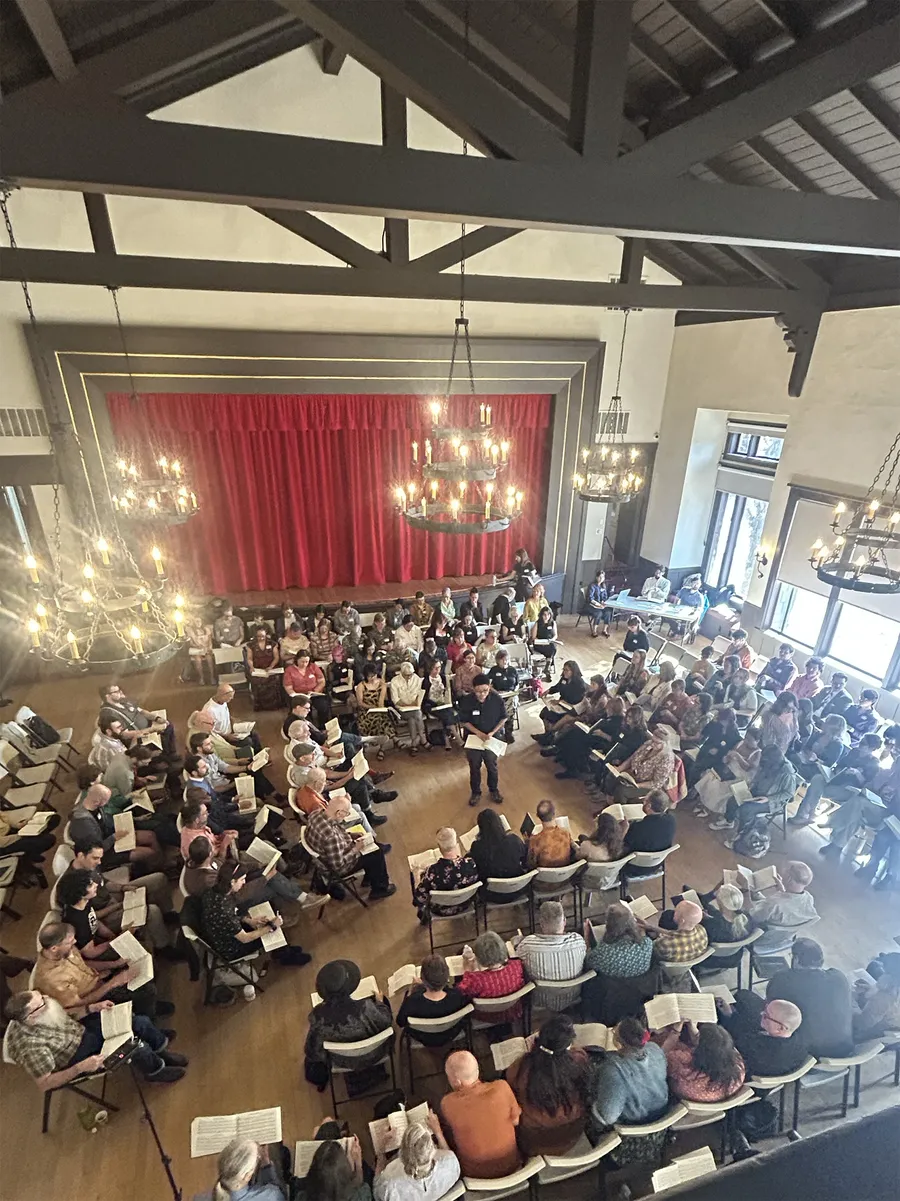
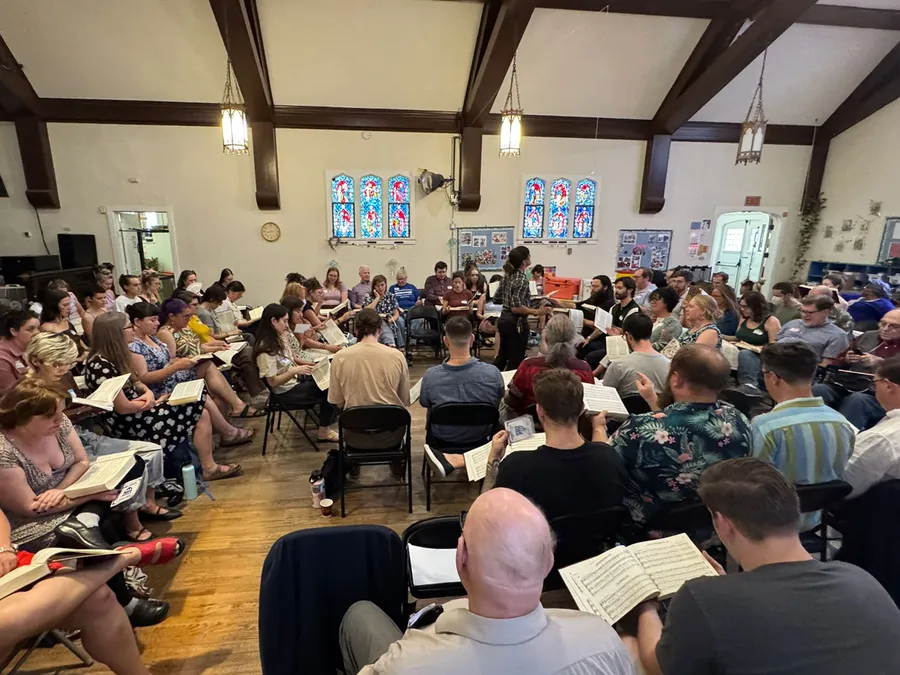
Overhead view of a large number of singers at the All-California convention.
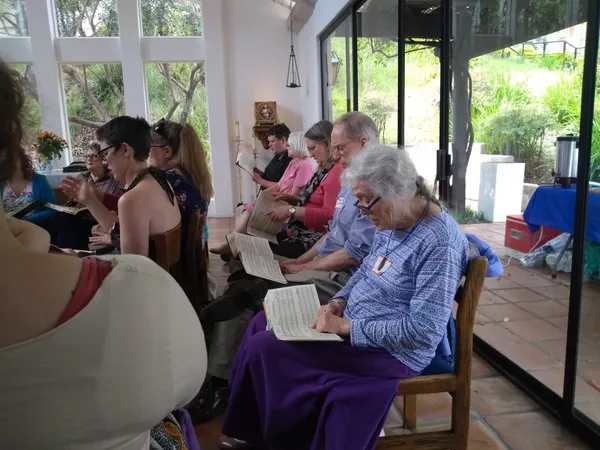
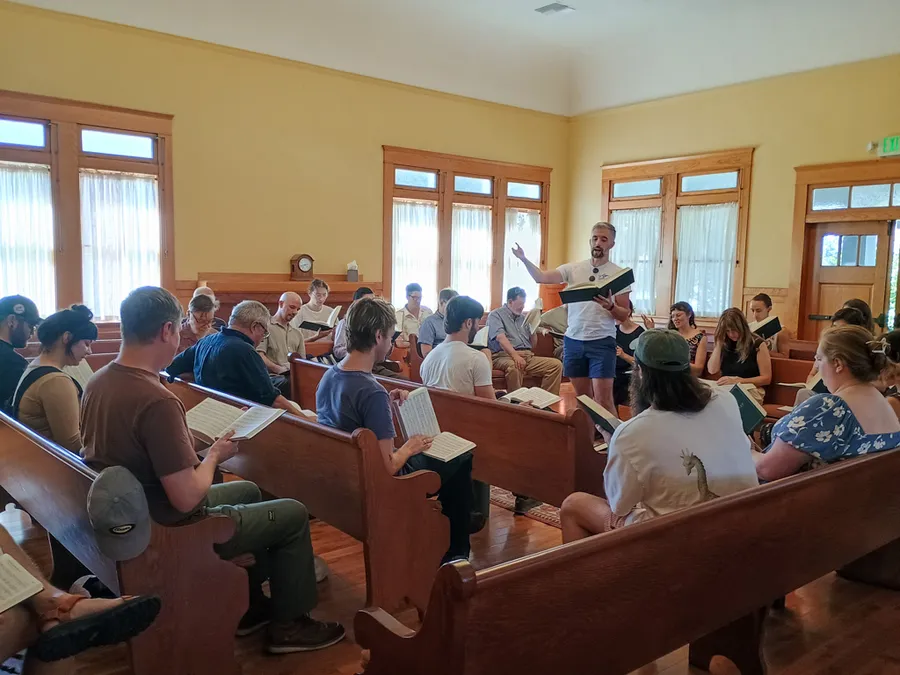
A singer leads a large class from the hollow square at the Orange Grove Friends Meetinghouse in Pasadena.
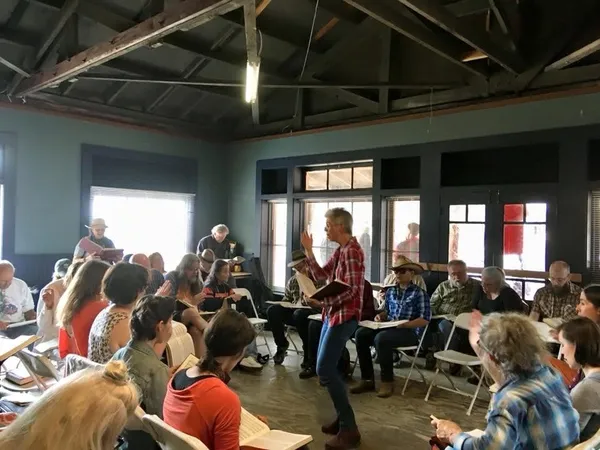
A shape-note convention with singers facing the hollow square while a leader directs a tune.

Connect

We welcome you to join us at a singing! Stay updated by joining our Google discussion group for notifications (requires a Google account) or the Los Angeles Area Shape Note Singers public Facebook group. We recommend you join one of these options for the most current information, as this site is updated only periodically. Alternatively, you can contact us directly with questions.
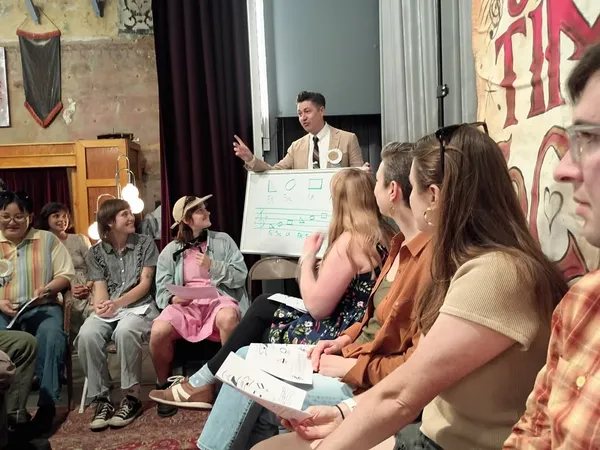
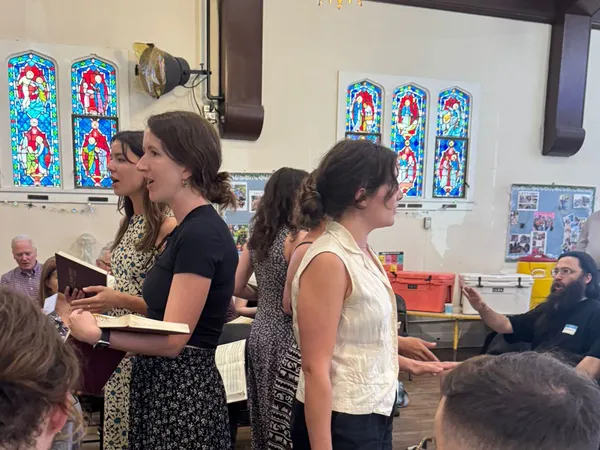
What is Sacred Harp/shape-note singing?

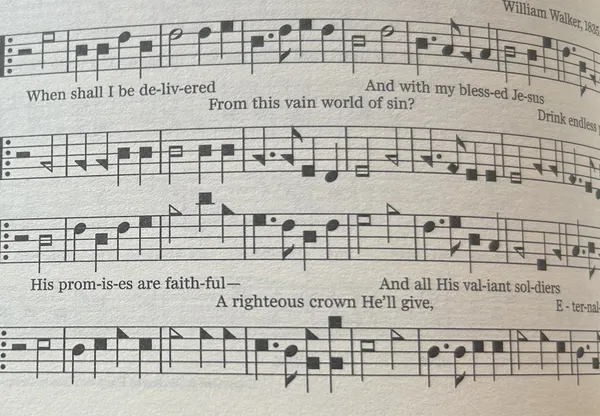
Sacred Harp is a uniquely American tradition of communal, four-part singing with roots going back to the eighteenth and nineteenth centuries. We sing a cappella tunes composed from distinctive “shape notes,” where the shapes signify specific notes of a scale and teach singers how to read music. One of the most important and popular shape-note tunebooks is the Sacred Harp (originally printed in 1844), which itself refers to the unaccompanied human voice. Shape-note singing is inclusive, non-denominational, self-led, and social, and it continues to bring together people of all backgrounds, beliefs, and identities.

Do I need to be able to read music or have prior experience to join?

Absolutely not! Sacred Harp singings are open and welcome to all, regardless of experience. Singers at any given session will have a wide variety of experience and skill levels. The best way to learn the music is to come experience a singing!

What does it sound like?

Sacred Harp singing is unlike most four-part choral singing that many people are familiar with from church or school choirs. Steeped in the sonorities of Southern folk music, the sound has a raw force that has been variously described as rousing, raucous, relentless, primal, and transcendent. The best way to hear this music is to join us at a singing! You can also watch recordings from the All-California Convention (Part 1 and Part 2) or see traditional singings in the documentary film Awake, My Soul (2008).

I’m new; what can I expect at my first singing?

First of all, welcome! There are no rehearsals, requirements, commitments, or rigid rules for Sacred Harp singings; you can observe and/or participate at whatever level you feel comfortable. You should also feel free to ask any singer for help finding a section you might want to sit in. Most local singings have “loaner books” available, which you can borrow for the duration of the singing. This Beginner’s Guide (PDF, 57 KB) by Lisa Grayson also has more details and tips for any curious singers.